🪢 What is paid search cannibalization?
Cannibalization happens when paid ads reduce the organic CTR on keywords where you already rank well. The ads sit above the organic result and absorb part of the traffic that would normally go to your unpaid listing.
🪢 Why does cannibalization matter?
Cannibalization matters because it affects efficiency. Even if organic can never fully match the combined clicks of paid and organic, removing paid from non essential queries can
🪄 free budget
🪄 increase organic contribution
🪄 improve channel alignment
without harming the overall paid performance.
🪢 Why do ads reduce organic CTR?
Users click the top visible result. When a paid ad appears first, the organic result loses visibility even when it ranks well. This reduces the organic CTR and shifts part of the natural demand toward paid.
🪢 How do I know if a keyword is being cannibalized?
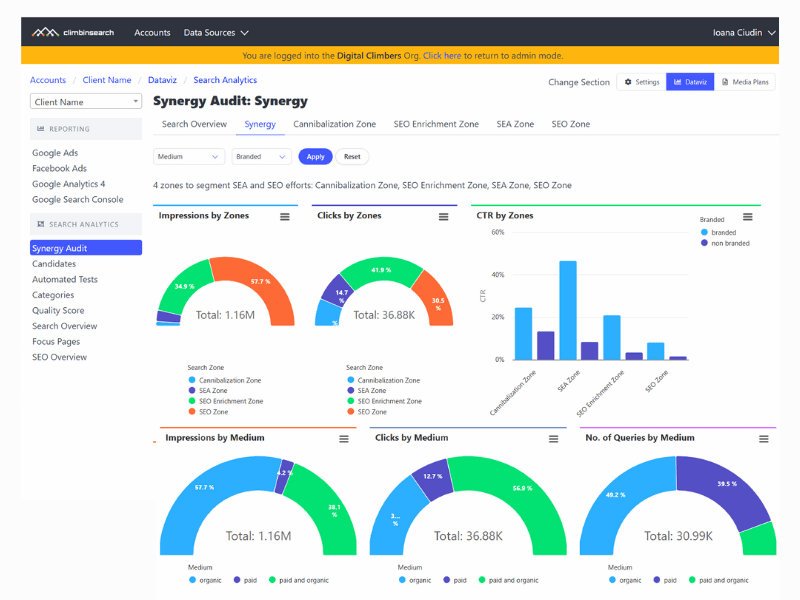
You need unified visibility for both channels. When you join Google Ads and Google Search Console data you can see
🪄 organic ranking
🪄 paid and organic impressions
🪄 paid cost
🪄 CTR changes when ads run
These signals reveal where overlap exists.
🪢 Does pausing paid search bring back organic clicks?
Yes, but only partially.
Organic CTR increases when paid is paused, but it will not fully replace paid + organic combined performance. The value comes from increasing unpaid traffic and redirecting paid budgets to more impactful areas.
🪢 How do cannibalization tests work?
Tests compare two real scenarios
🪄 paid active
🪄 paid paused
By measuring how organic reacts during the pause, you can understand whether paid spend is essential, incremental, or non essential for that query.
🪢 What does a successful cannibalization test show?
A successful test indicates that paid ads were not essential.
🪄 organic CTR increases, extra organic clicks
🪄 paid cost decreases, saved cost to reinvest
🪄 total performance stays stable
These queries are good candidates for reducing or pausing paid spend.
🪢 What does a failed test show?
A failed test means paid search was strategically important.
🪄 total clicks drop
🪄 conversions decline
🪄 brand or category visibility weakens
For these queries, dual presence makes more sense.
🪢 Should paid and organic run together on all important keywords?
Not necessarily. Dual presence is recommended when the keyword is
🪄 highly competitive
🪄 valuable for revenue
🪄 brand critical
🪄 high intent and sensitive to visibility
These are the queries where paid and organic together improve results.
🪢 How often should cannibalization be reviewed?
Cannibalization does not need monthly manual review. The automated test lifecycle already handles the full evaluation process.
Here is how the cycle works:
🪄 Baseline month: the system uses the previous month with paid ads active
🪄 Learning period: fourteen days for organic behaviour to stabilise after pausing the keyword
🪄 Runway phase: continued testing up to day one hundred, unless the keyword loses eligibility along the way
🪄 Reevaluation: after one hundred days, the keyword reenters the pool with fresh benchmark data
🪄 New decision: the system checks again whether it is still a valid test candidate
This creates a continuous, automated cycle that removes the need for manual review.
🪢 How does fixing cannibalization improve efficiency?
When you reduce spend on non essential keywords you can
🪄 reallocate budget to incremental paid queries
🪄 increase organic contribution
🪄 lower cost per acquisition
🪄 create a cleaner search mix
🪄 support better SEO SEA alignment
🪢 Does cannibalization mean paid search is bad?
Not at all. Cannibalization simply shows where paid is not needed. Many queries require both channels active because the strategic value comes from combined visibility. The goal is not to remove paid search. The goal is clarity and balance.
The real value is clarity. You stop guessing which keywords need paid support and which do not. This leads to better budgeting decisions, stronger organic usage, and smarter prioritization across your entire search strategy.