Most teams don’t lack tools.
They lack a unified search reality.
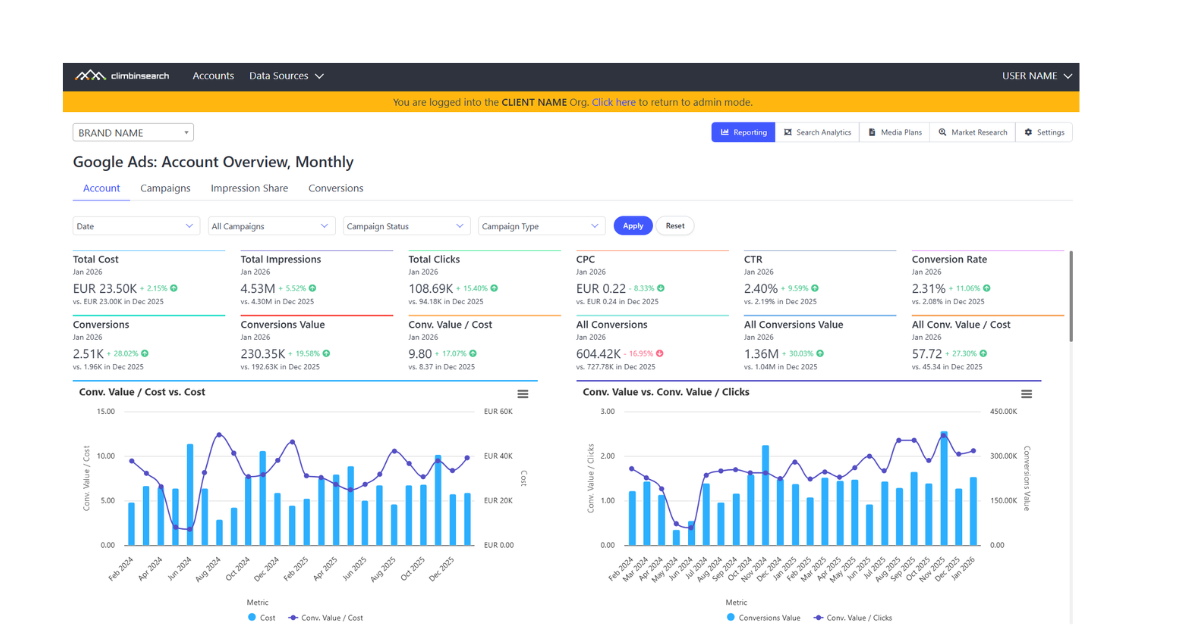
Search Analytics solves the problem of fragmentation between SEO and SEA: organic performance lives in Search Console, paid performance lives in Google Ads, and the story gets stitched together manually.
By putting SEO and SEA into the same structure, with the same rules, teams stop debating what the numbers mean and start seeing how search demand actually behaves across channels.
Reporting shows what happened.
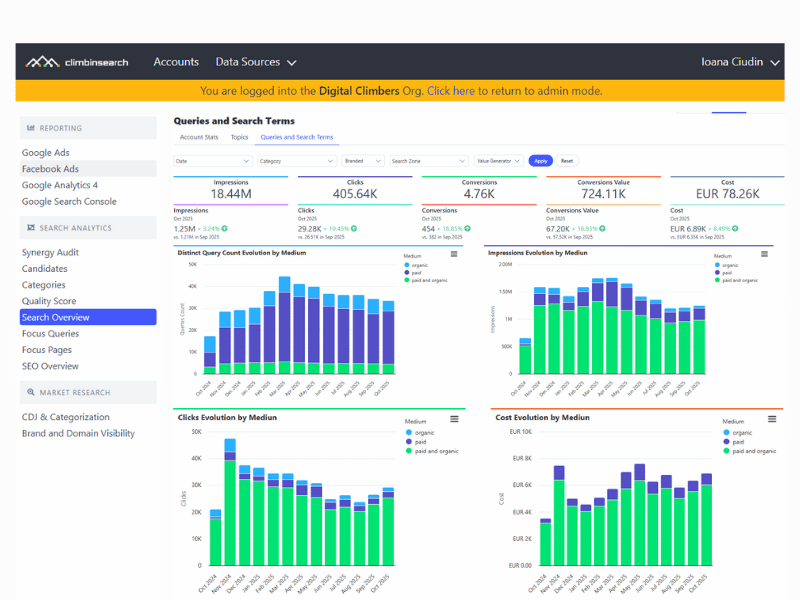
Search Analytics shows how paid and organic interact.
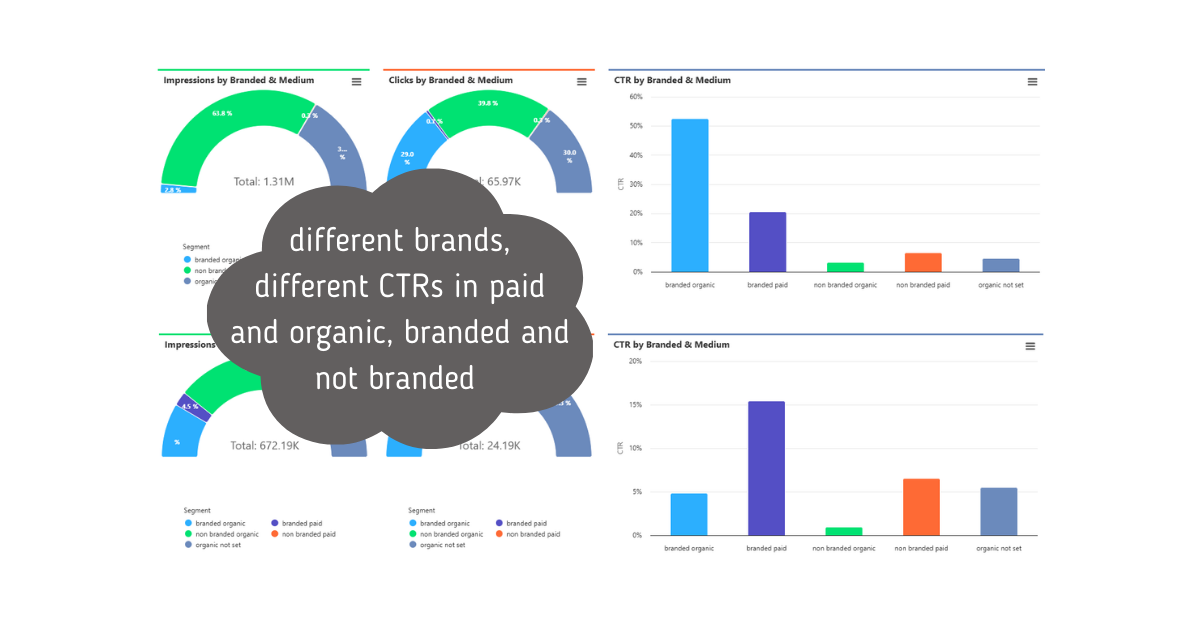
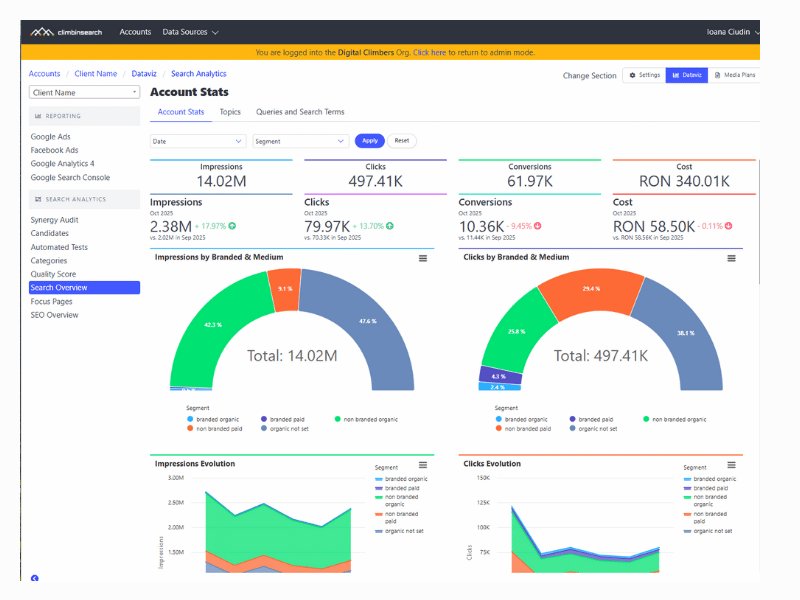
It connects impressions, clicks, CTR, branded vs non branded, and category logic into one model so you can see overlap, gaps, and monthly shifts as a system, not as separate reports.
It’s less about visualisation, more about decision clarity for search.
Search Analytics turns monthly search performance into strategy.
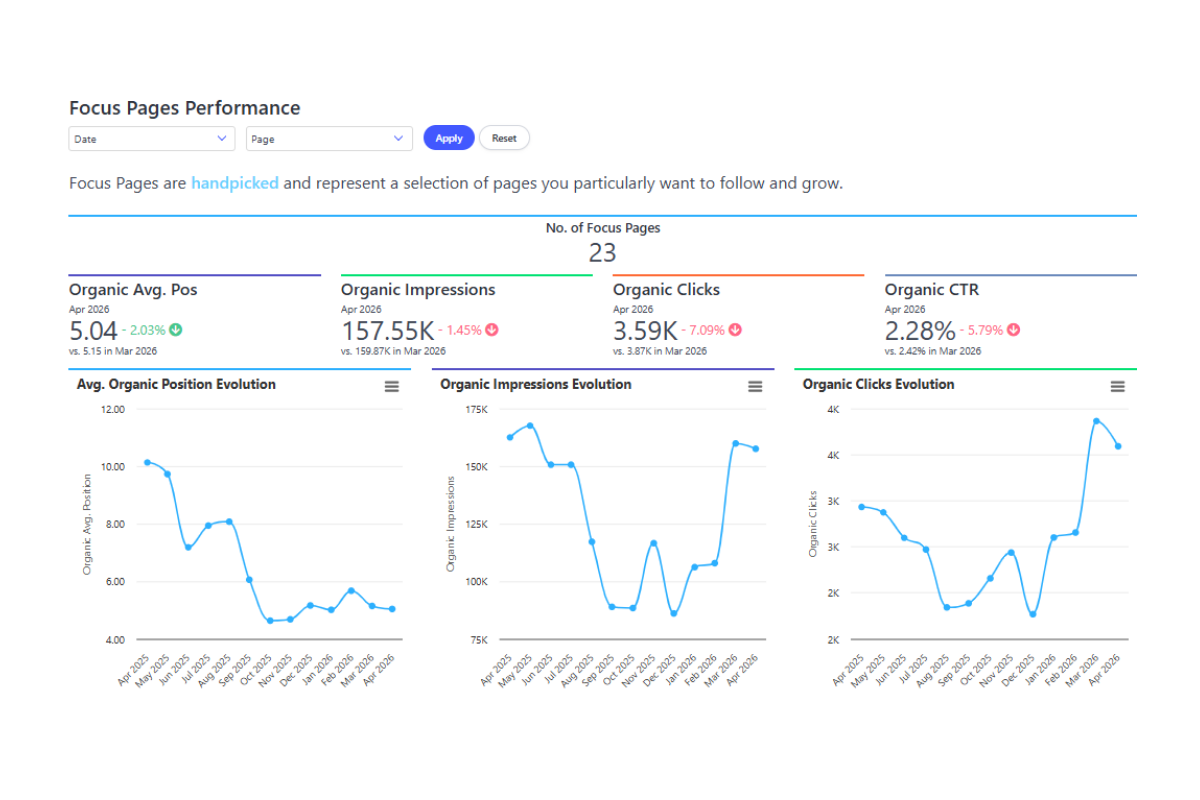
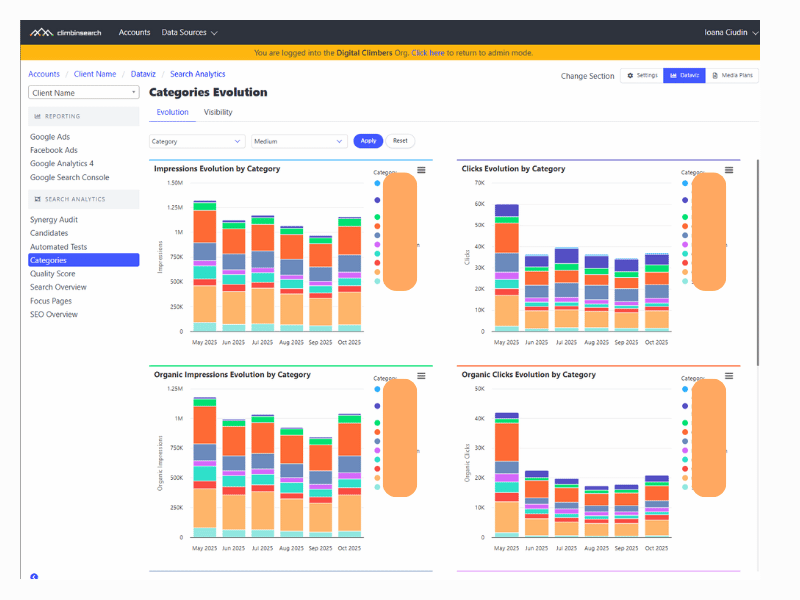
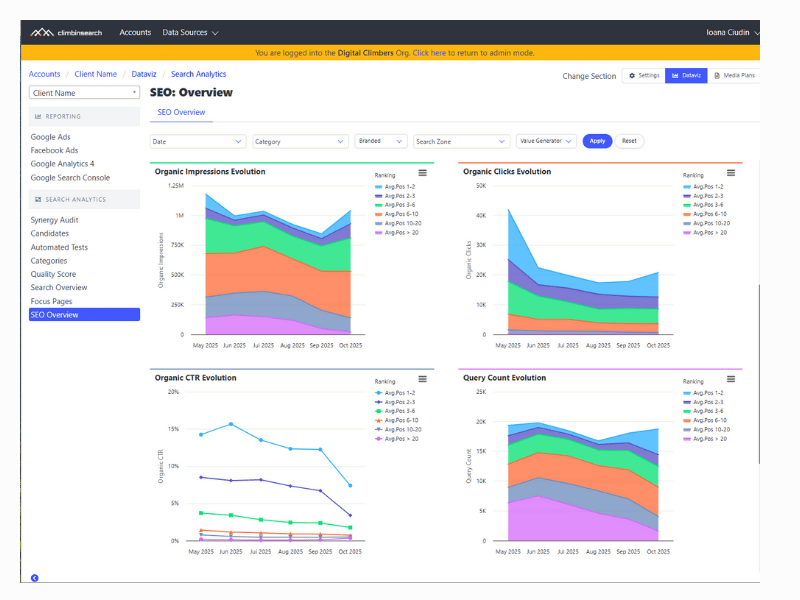
Teams use it to spot demand shifts, track branded vs non branded evolution, understand category performance changes, and decide what to prioritize next in SEO content and paid bidding.
Instead of reacting to isolated KPIs, you build a monthly rhythm of search decisions.
Yes. That’s one of the core outcomes.
Search Analytics highlights overlapping queries, enrichment zones, and performance gaps so you can understand where channels should align, where one should lead, and what to test next.
This helps teams allocate budgets wiser and build a cleaner search mix.
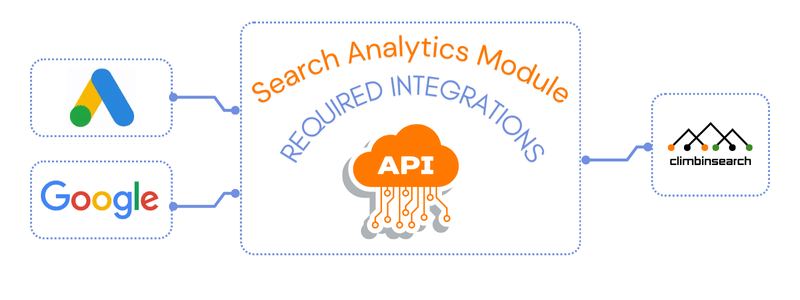
Just Google Search Console and Google Ads.
You connect the accounts, define branded rules, add your categorization logic, and the system updates automatically every month. No spreadsheets, no manual imports, no switching between tools.