HubSpot recently updated an article titled 14 Media Planning Tools I Tried and What Worked Best, written by AJ Beltis and updated on March 5, 2025. The roundup is useful because it reflects how most teams actually shop for help once spreadsheets start breaking.
If you want the full list, you can read it here: https://blog.hubspot.com/marketing/media-planning-tools
The list includes a paid media template, agency operations software, audience and measurement providers, execution platforms, social media tools, and general project management.
It is a good list. It is also a perfect example of the real problem.
Most media planning tools are not built to run media planning.
They help you store plans, coordinate buying, or understand audiences. But they do not solve the part that breaks every month for performance teams.
The hardest part is not building a plan.
The hardest part is operating the plan.
This is what usually happens in digital.
Not because people are careless. Because digital is dynamic. Delivery changes every week. Auctions shift. Creatives fatigue. Competition spikes. Inventory changes. Tracking changes. Your own budget allocation changes.
So the real job becomes this.
• Are we delivering what we planned
• If not, how far off are we
• Why
• What do we change this week
• How do we explain the variance clearly to stakeholders
If you cannot answer those questions quickly, you do not have a media plan you can run. You have a document.
HubSpot’s roundup is useful because it reflects a truth most teams learn the hard way.
There is no single tool category called media planning tools.
There are multiple categories that solve different jobs.
When you read the list through that lens, it becomes much easier to choose what you actually need.
HubSpot leads with a free paid media template. This category is popular for a reason. It is fast to adopt. It is flexible. It requires no implementation.
It is also fragile.
Templates work when planning is simple and when reporting is monthly. They struggle when planning becomes a weekly operating rhythm.
Common failure points look like this.
• Multiple channels and multiple owners create inconsistent inputs
• The plan becomes a static file while delivery lives in platform dashboards
• The team spends more time updating the sheet than making decisions
• Stakeholders see reports late, after the month is already over
• No one trusts the numbers because definitions shift each month
Templates are great for starting. They are rarely enough for scaling.
HubSpot includes tools that focus on operational workflows. In the market you will see platforms that help agencies and marketing teams manage placements, vendors, requests, approvals, and invoicing.
These tools solve real pain. They reduce chaos. They centralize documents. They keep teams aligned.
But many teams still face the same gap even after adopting an ops platform.
They can manage the buy, but they still cannot clearly operate delivery versus plan week by week.
HubSpot lists well known data and measurement brands used for audience segmentation, consumer insights, and planning inputs.
These are important when your challenge is about context.
• Understanding who the audience is
• Selecting channels for reach and frequency planning
• Building market context and competitive context
• Working across traditional and digital touchpoints
But these tools do not replace weekly operational control. They inform planning. They do not run it.
HubSpot also includes platforms positioned around omnichannel buying, automation, and cookieless targeting.
These can be powerful. They often improve efficiency and scale.
But they usually optimize inside their ecosystem. For most teams, the plan still lives somewhere else, and cross channel governance still becomes a manual job.
HubSpot includes social media tools and also general work management tools like Monday.
They help teams ship content and coordinate work.
They are not built to be a performance truth layer for paid media planning.
Planned versus achieved
Every category above is useful. None of them is the missing layer that makes media planning work as a system.
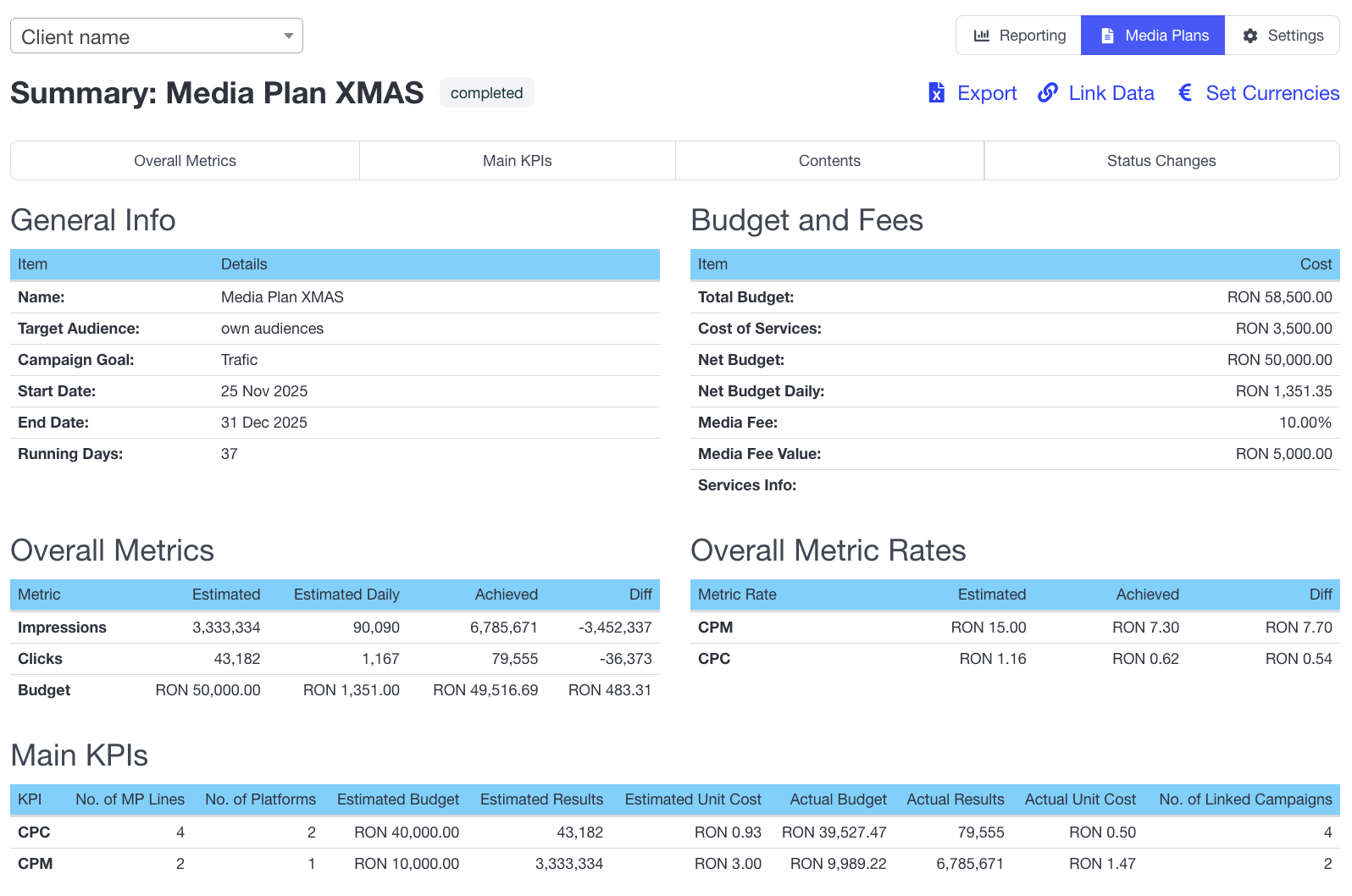
The missing layer is planned versus achieved.
Planned versus achieved is not a chart at the end of the month. It is the operating view you use throughout the month.
It answers five questions.
• What we expected to happen by this point in time
• What actually happened by this point in time
• The variance and its severity
• The likely cause
• The intervention required
Without that layer, planning becomes storytelling and reporting becomes explaining.
With that layer, planning becomes control.
Traditional media buying often involves fixed commitments. Once booked, there is limited room to adjust. The plan is the commitment.
Digital is different.
You can adjust, and you must adjust.
Budgets move across ad sets. Bids change. Audiences expand or narrow. Creatives rotate. Spend can accelerate or stall. Performance can swing fast.
That flexibility is a strength, but it creates a new requirement.
You need a system that can tell you early, clearly, and consistently when execution is drifting away from plan.
Otherwise, flexibility becomes noise.
If you want the deeper argument for this, you can also read the article on why traditional media planning does not work in digital.
A real media planning tool needs to do five things well.
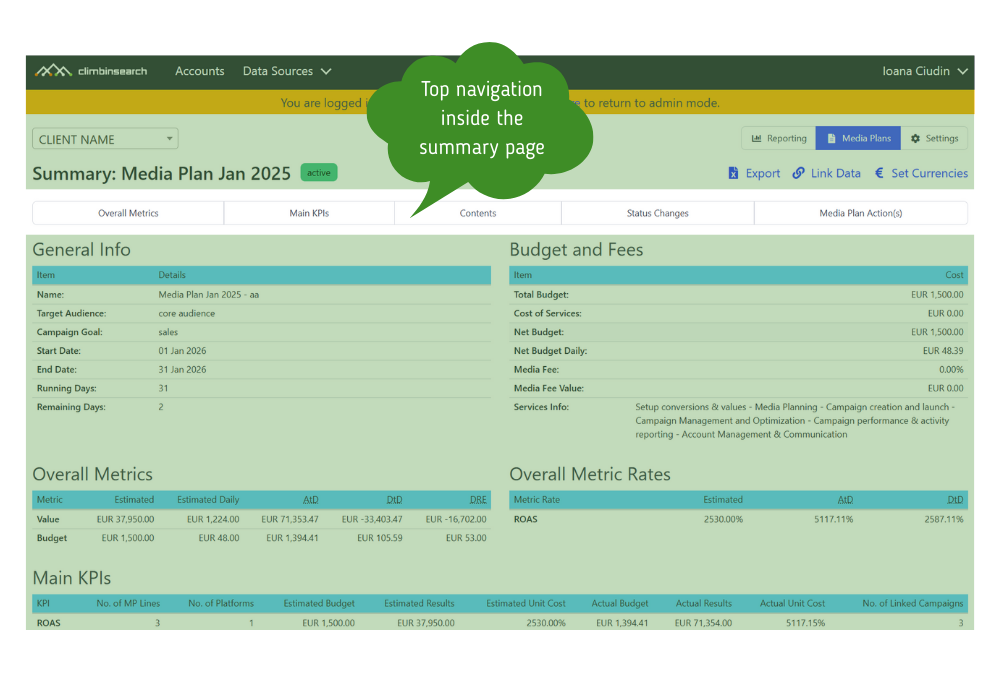
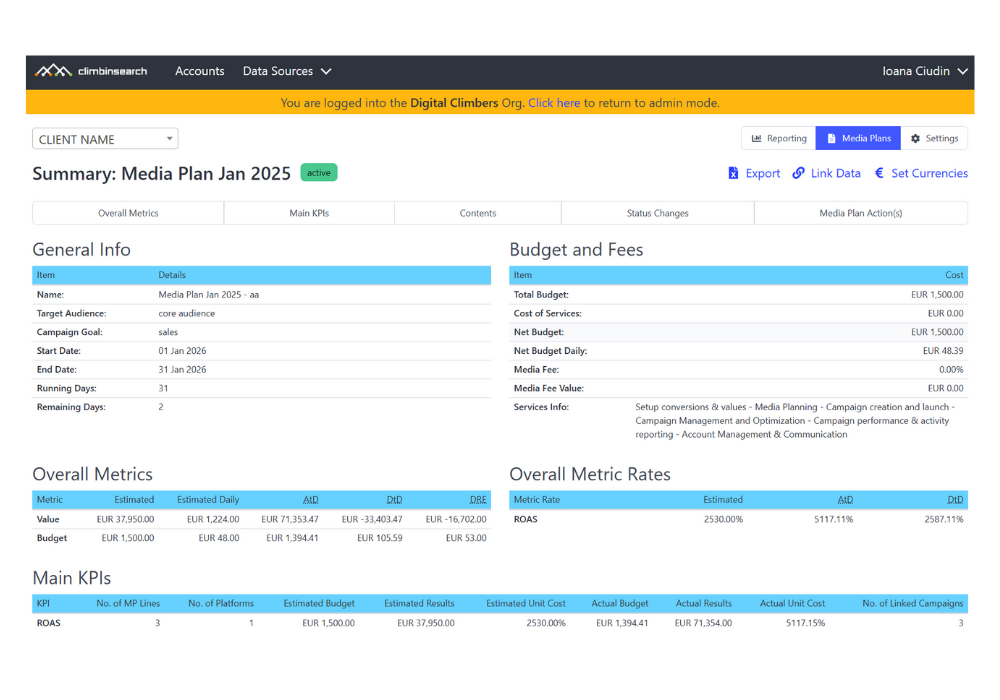
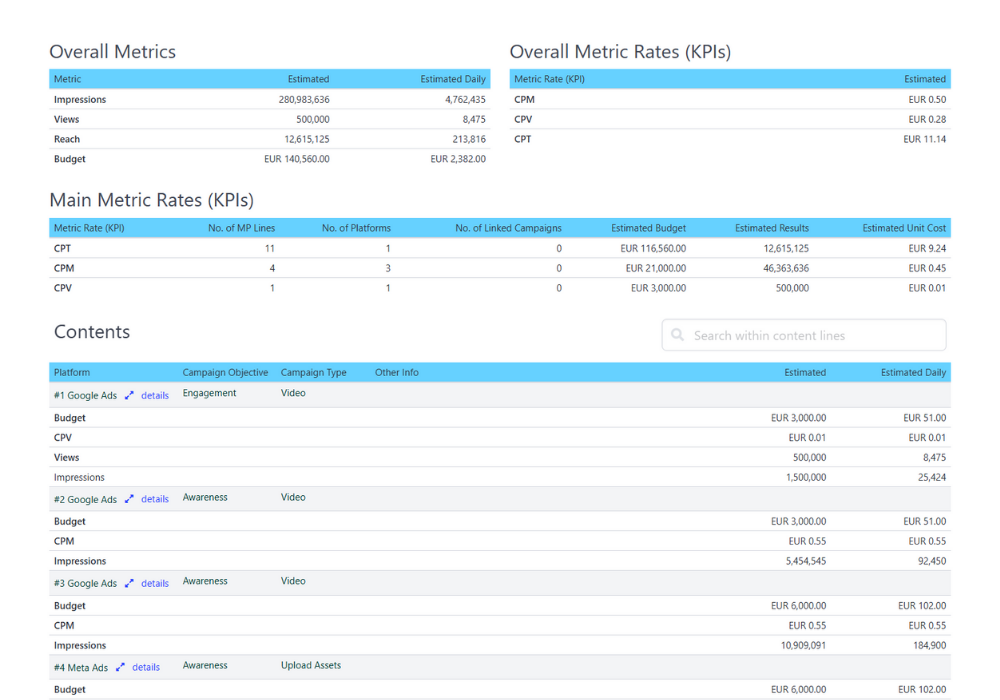
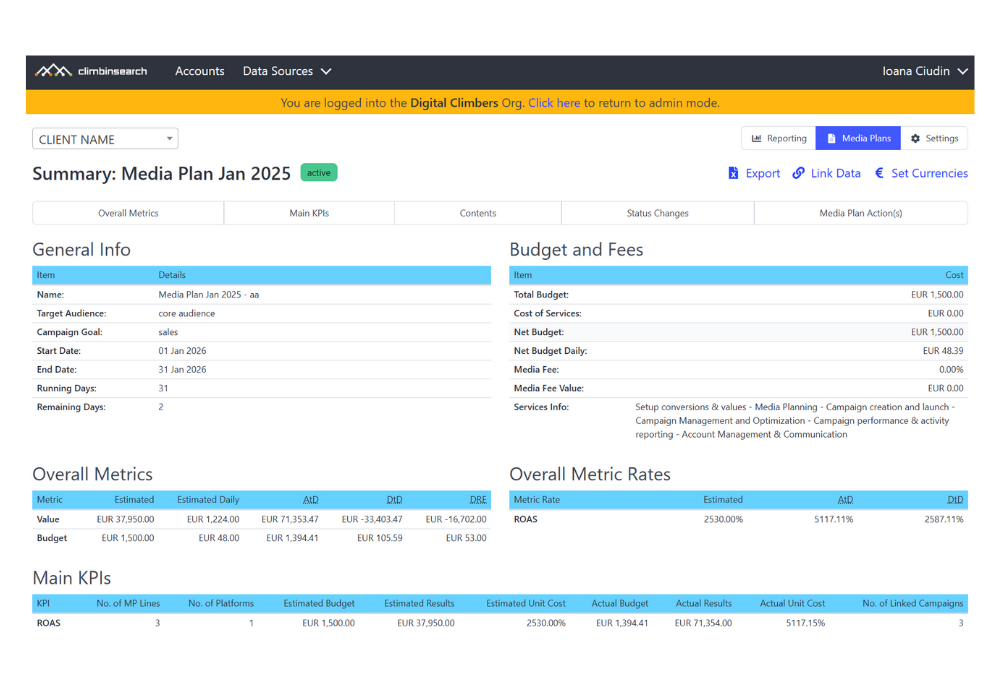
ClimbinSearch was built to treat media planning as an operating workflow.
Not a file. Not a one time forecast. Not a monthly report.
An operating workflow.
The media planning module is available to access any time for more details.
In ClimbinSearch, the plan remains connected to how you track delivery.
That means the team has one place to answer the question that matters every week.
Are we on plan? If not, you see the variance early and you can intervene while there is still time to correct.

Most teams do pacing conversations from memory and platform screenshots.
ClimbinSearch turns pacing into a consistent workflow.
You identify underdelivery and overdelivery early and act based on agreed thresholds.
Most teams plan in one place and then measure in many places.
ClimbinSearch is built to keep the plan logic consistent while execution moves across platforms.
That is how you avoid the usual trap where each channel has its own truth and the team spends time reconciling instead of managing.
A media planning tool should help you decide what to do next.
When delivery drifts, the question is not who is to blame.
The question is what lever needs to change this week.
ClimbinSearch is designed to support that decision making rhythm.
HubSpot’s roundup is valuable if you use the right lens.
Ask one question: What breaks first in our process?
If documentation breaks first, start with a template.
If operational coordination breaks first, adopt an ops platform.
If strategic inputs break first, invest in data and measurement.
If performance control breaks first, you need planned versus achieved governance.
That last category is what ClimbinSearch is built for.
Open your current plan and answer these questions in five minutes.
If it takes more than five minutes, your tools are not running media planning. Your team is.
HubSpot’s article is a great reminder that teams do not need more tools for the sake of tools. They need the right layer.
The biggest gap is not more dashboards. The biggest gap is operational control.
Media planning works when planned versus achieved is visible, consistent, and actionable.
That is what ClimbinSearch is built to deliver. If you want to see how ClimbinSearch Media Planning runs planned versus achieved in a real workflow, explore the module page and book a demo: https://www.climbinsearch.com/media-planning-module