Market research is often treated as a report. In reality, it should be treated as a system.
A report can look convincing and still be wrong. A system is different. A system has clear definitions, stable rules, and a repeatable way to read the market so you can update it later and trust the comparisons.
This article explains search based market research as we apply it in a real market insights setup, step by step. Search based market research uses search data to model demand, category structure, and competitive visibility, so teams can make decisions grounded in how people actually search.
Search based market research turns search behavior into a structured view of market demand.
It is not keyword research for content production. It is market research using search data, built to answer strategic questions like what topics drive demand, how the category is structured, and where brands and competitors are visible by topic.
In practice, this approach replaces three common patterns that often fail to support decisions.
First, it replaces generic category reports that describe the market but do not show what people actually ask for and how demand is structured.
Second, it replaces brainstorming led strategy, where teams create a roadmap first and use data later to justify it. Using a dedicated market research tool flips this order, allowing you to build priorities from what people are actually asking.
Third, it replaces one off competitive snapshots that show who ranks today but cannot explain competitive visibility by topic or how attention shifts over time.
What it does not replace is business truth. Search demand is not market share. Search data creates strong hypotheses about attention and intent. Business data confirms or contextualizes them.
Before looking at any data, I define the scope.
Let’s assume we’re working for La Sportiva. The first decision is not about tools or keywords. It is about focus. In this case, I’m interested strictly in climbing, not the full brand portfolio, and more specifically, climbing footwear.
Even within a single brand, not everything is relevant for every decision. A good market research workflow starts by being deliberately narrow.

For geography, I chose United Kingdom, in English. The reason is simple: it’s a mature market and allows me to work with clean, international search semantics.
Once the scope is clear, the next step is deciding how I want to analyze the data.
Before collecting anything, I define the segmentation logic. This is the foundation of search based market research, because it determines whether the data will be readable and comparable over time.
For this project, I set up:
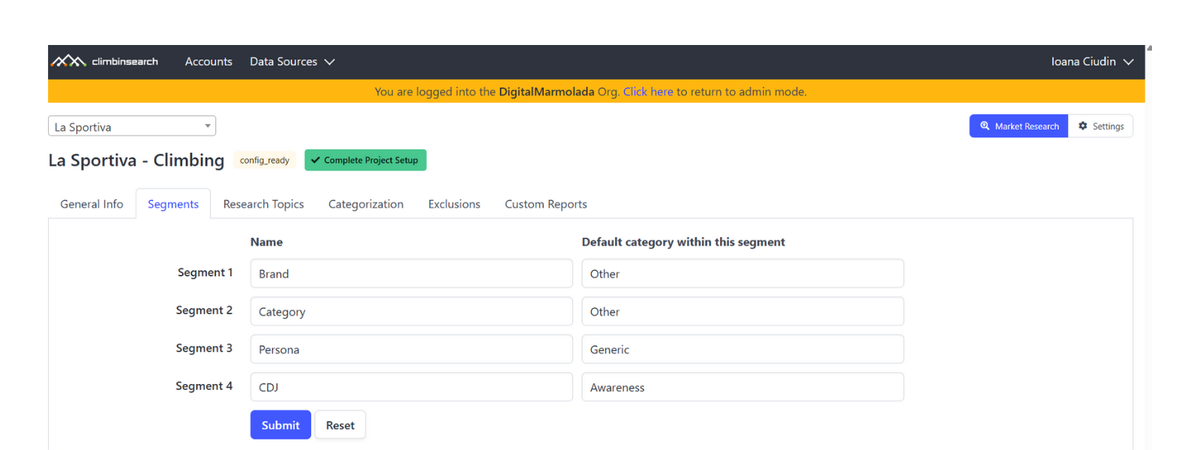
Anything that doesn’t match a rule is automatically grouped into Other.
That’s important. No data is dropped, only structured. This governance layer is what turns raw queries into a market model. At this stage, nothing is “right” or “wrong”. The goal is to create a clear reading framework.
This is the most time-consuming part, and also the most valuable.
Instead of relying on generic keyword research lists, I build research topics using semantic discovery so the setup has topic coverage and reflects how people search in the real world. I build research topics by combining:
For example, for Climbing Shoes, I include:
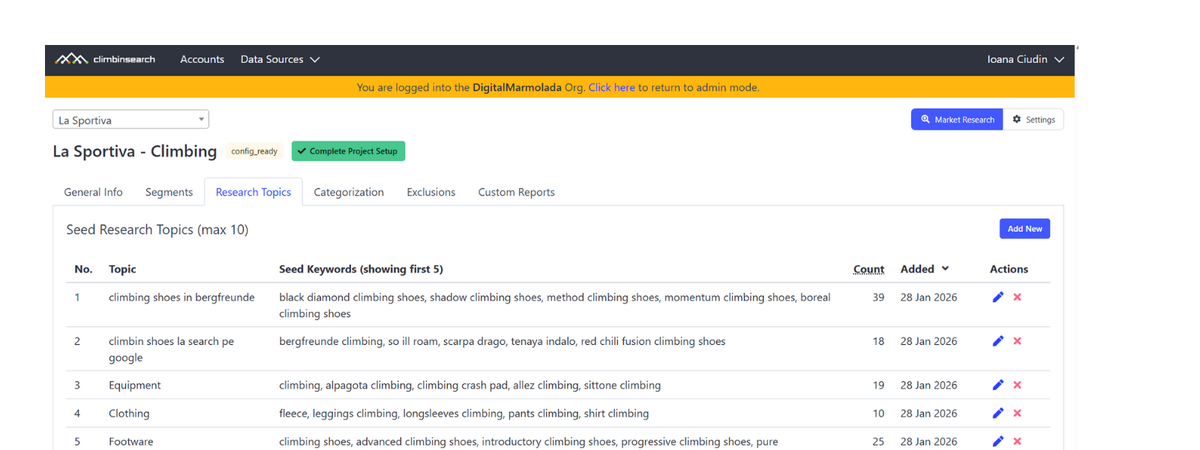
The goal is not perfection from day one. The goal is semantic coverage.
A strong setup is built once, then refined over time. That is how Market Insights becomes a repeatable system, not a one time exercise.
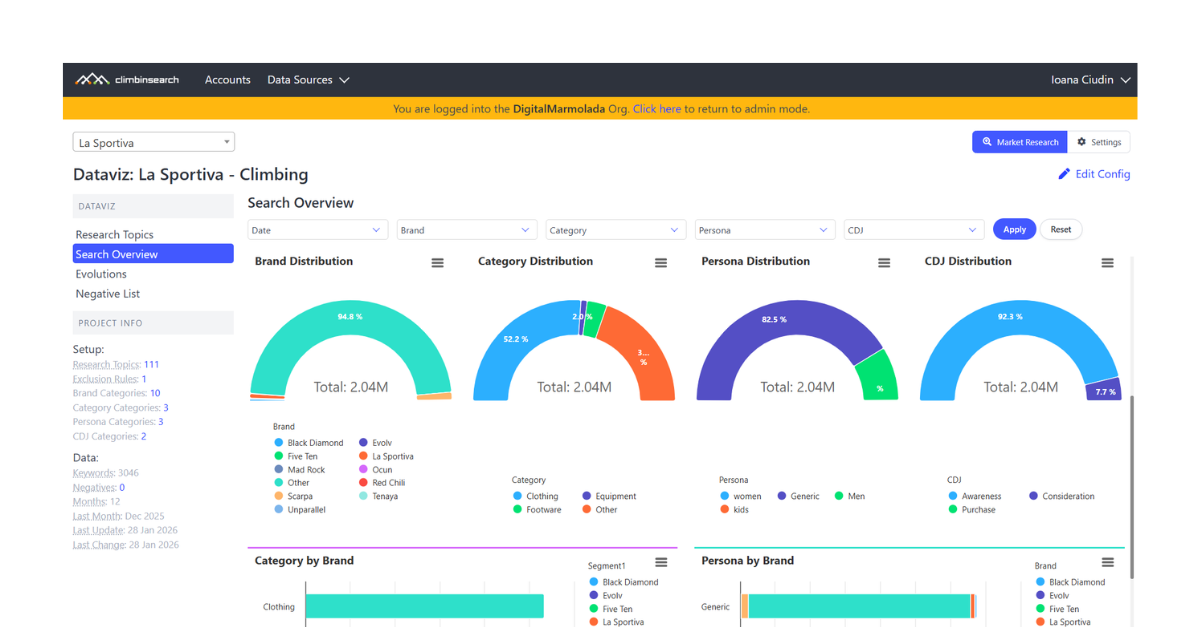
Once the setup is complete, I move into the dashboards.
The first thing I look at is market size.
For the defined universe in the UK, the data shows roughly 2 million searches per month.

Then I zoom into footwear to read demand structure:

One insight stands out immediately:
👉 Based on search demand, Scarpa appears larger than La Sportiva on climbing shoes in the UK.

This is not something I would have confidently assumed without data. It is an example of how search insights can challenge assumptions early.
This is where methodology matters.
Search data shows interest and demand, not market share.
So before treating this as a conclusion, I do two things.
While reviewing the dashboards, I notice:

I go back into the settings and find the issues:
I fix the rules, reprocess the data, and review the results again.
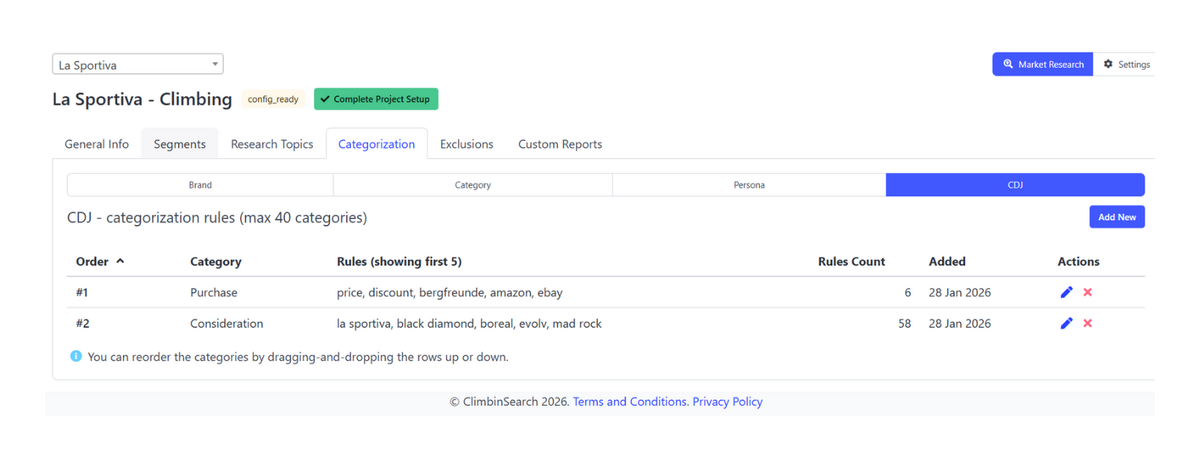
This step is critical. Early insights help you improve the setup, not just read it. Validation is what makes search based market research reliable.
After corrections, the pattern remains:
search demand for Scarpa is higher than for La Sportiva in the UK, in climbing footwear.
At this point, the next step is not more dashboards.
👉 The next step is validation with the client.
I always confirm insights like this using:
This removes blind spots that search alone cannot cover, such as:
Search creates strong hypotheses. Business data confirms or contextualizes them. That’s the responsible way to use search data for market research.
Once the setup is stable, the same data can be used for many decisions:
All without rebuilding the research from scratch. And this is where search based market research becomes operational.
You can track market demand by topic, monitor competitive visibility by topic, and revisit the same model quarterly to see what changed and where to act.
Market research should not be a one-off report.
It should be a living system:
That’s what search-based Market Insights is designed to be. Not an answer generator, but a framework for better decisions.