In traditional media, planning exists to lock decisions in advance.
Budgets are committed. Placements are booked. Schedules are fixed. Once the plan is approved, execution follows a predefined path. Monitoring exists, but the ability to intervene meaningfully during delivery is limited or nonexistent.
This makes the traditional planning model coherent.
You plan carefully upfront because you will live with the consequences until the campaign ends. Any correction happens in the next planning cycle, not during the current one.
This logic is still valid for offline media.
Digital media does not remove the need for planning. In fact, it increases it.
Digital campaigns are still planned, reviewed, and approved upfront. Budgets are allocated. KPIs are defined. Pacing expectations are set. A time frame is established.
What changes is what happens after launch.
In digital media, execution is not fixed. Performance data arrives continuously. Auctions shift. Competition changes. Platforms optimize automatically. And most importantly, budgets can be reallocated while the plan is still running.
This does not mean plans are optional.
It means plans must be managed differently.

The critical distinction between traditional and digital media planning sits in one place: the running period of the plan.
In traditional media, the running period is largely passive. Delivery happens according to prior commitments.
In digital media, the running period is active. This is where performance deviates from expectations, where pacing matters, and where decisions can protect or damage outcomes.
The plan still has a beginning and an end.
What changes is that decisions can be made inside that window.
This is the point where traditional planning logic starts to break down.
One of the most common mistakes in digital media planning is to treat flexibility as a benefit on its own.
Digital allows adjustments, therefore teams adjust constantly. Budgets are moved. Campaigns are paused and restarted. Channels are rebalanced. All of this happens in response to performance signals.
Without a clear reference point, this flexibility turns into noise.
The question is not whether you can adjust.
The question is whether you know when you should.
This is where most fail.
Traditional media planning evaluates performance after execution ends. Digital media planning cannot afford that delay.
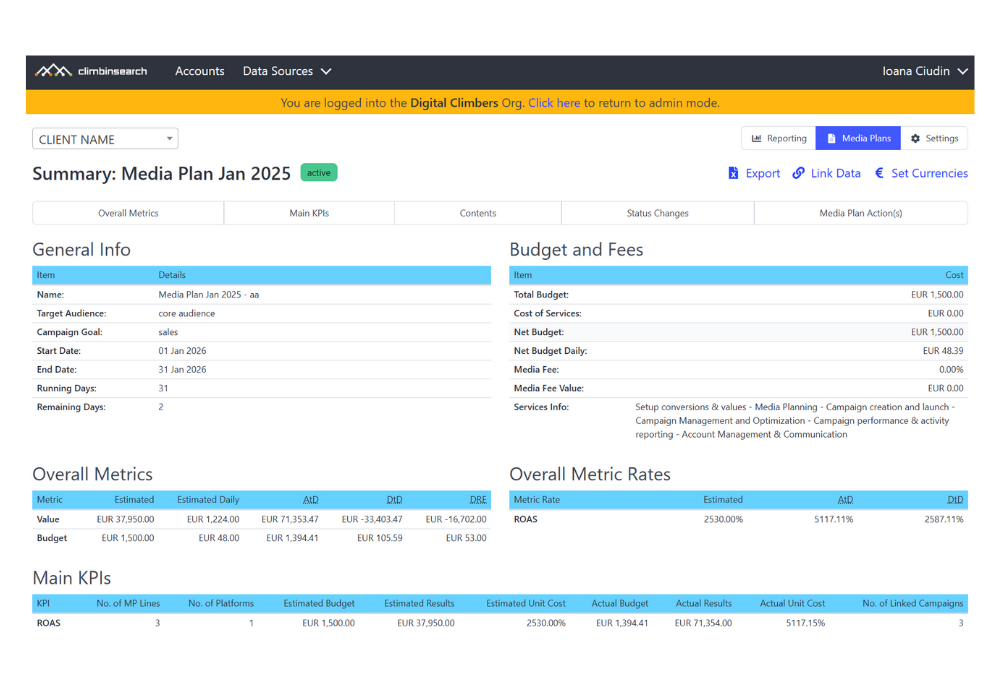
To manage a plan during its running period, teams need a continuous reference between what was planned and what is actually happening.
Planned versus achieved is not a reporting concept. It is a pacing system.
It answers simple but critical questions:
Are we ahead or behind spend expectations at this point in time
Are results accumulating faster or slower than planned
Which lines are deviating and by how much
Is this deviation acceptable or corrective action is needed

Without this reference, teams react to absolute numbers instead of context. They see performance but cannot judge whether it is early, late, fast, or slow relative to the plan.
This is when flexibility becomes dangerous.
Traditional media planning models assume that measurement exists to evaluate success after delivery.
Digital media planning requires measurement to guide decisions during delivery.
This difference changes everything.
Frameworks built around static steps, fixed allocations, and end of period evaluation are structurally incapable of supporting real time decision making. They were never designed for it.
When these models are applied to digital media, teams end up managing live systems with tools meant for post analysis. The result is delayed reactions, overcorrections, and decisions driven by intuition rather than pacing.
In traditional media, a spreadsheet can represent the plan because execution does not change.
In digital media, a spreadsheet captures intent but cannot manage reality.
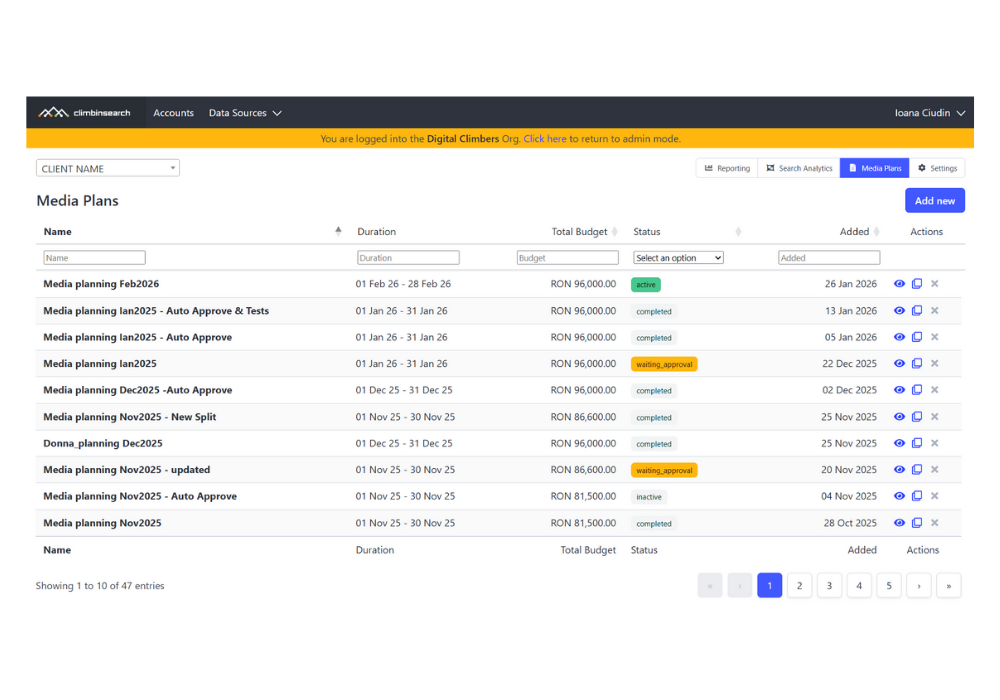
Digital media planning tools solve the operational problem, not the planning problem. They keep the plan usable during execution by keeping structure, approvals, and pacing visible while platforms keep moving.
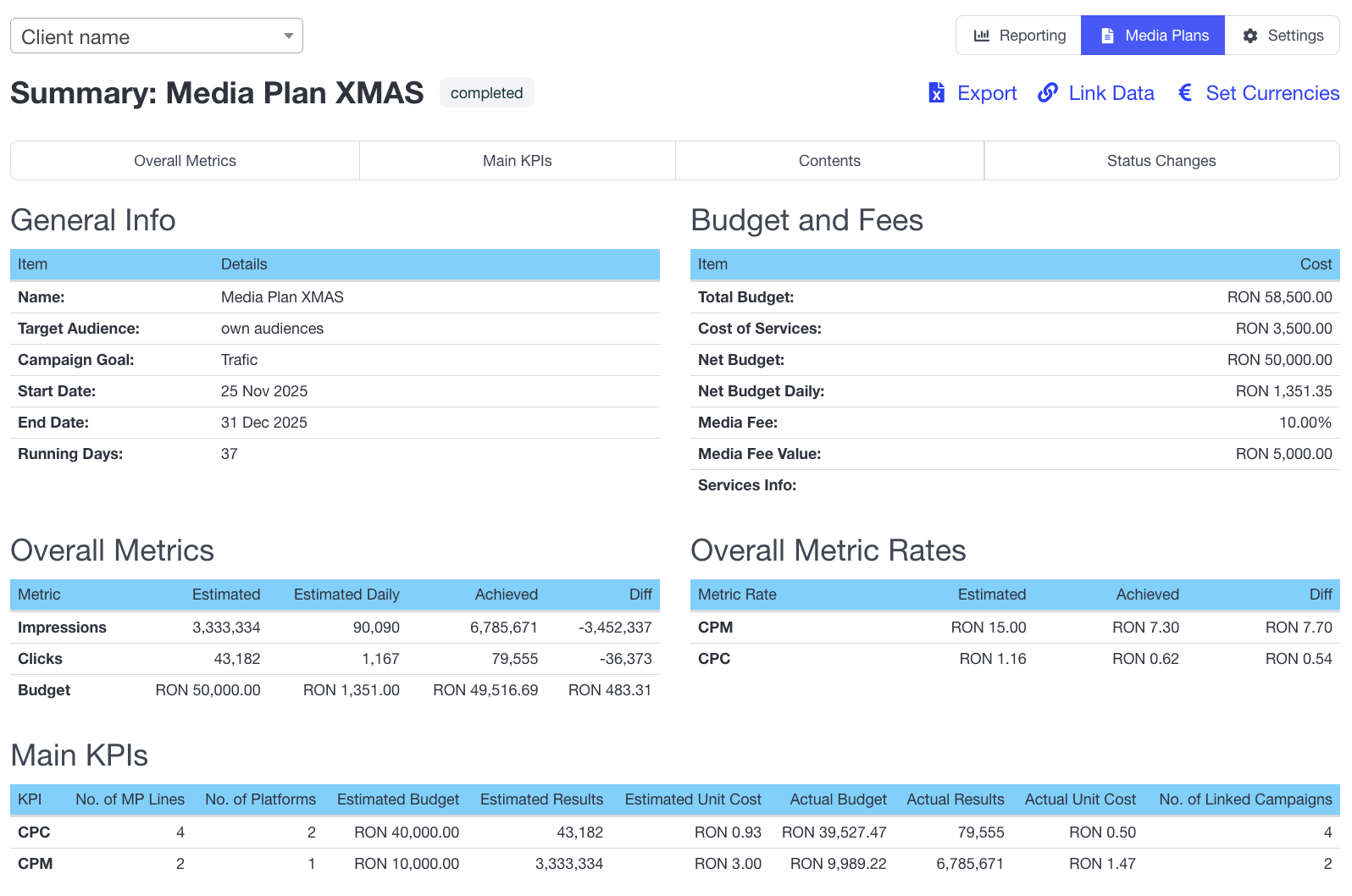
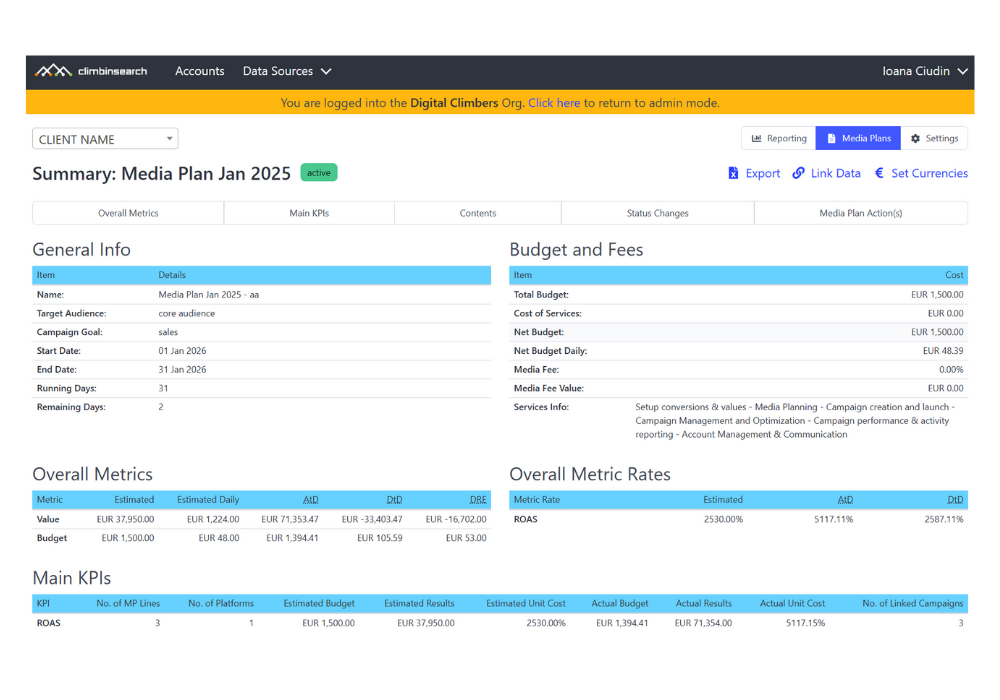
Managing a digital media plan requires keeping planned budgets, expected results, and achieved performance visible at the same time and updated continuously. Without this, planned versus achieved becomes a manual exercise, reviewed too late to matter.
This is why digital media planning cannot rely on documents alone. Digital media planning tools are required to keep planning viable during execution.
Without tools, the ability to adjust becomes a liability rather than an advantage. Planned versus achieved is the control mechanism that allows digital media planning to remain structured while execution stays flexible.
In traditional media, the media planner focuses on selecting channels and negotiating placements.
In digital media, the planner becomes responsible for managing deviation from the plan.
This includes monitoring pacing, identifying pressure points, and reallocating budgets when performance diverges from expectations. The job shifts from building a plan to steering it.
The skill is no longer avoiding deviation.
It is managing it deliberately.
One of the biggest misconceptions is that digital media planning is less structured because it allows adjustments.
The opposite is true.
Digital media planning requires more structure, not less. Plans must define pacing expectations. Adjustment rules must be clear. Decision making must be anchored in planned versus achieved comparisons.
What disappears is the illusion that a plan can be approved and ignored until the end.
Traditional media planning assumes that once execution starts, the plan is largely finished. Digital media planning assumes that once execution starts, the plan must be actively managed. That single operational difference explains why traditional planning models do not translate well into digital environments.