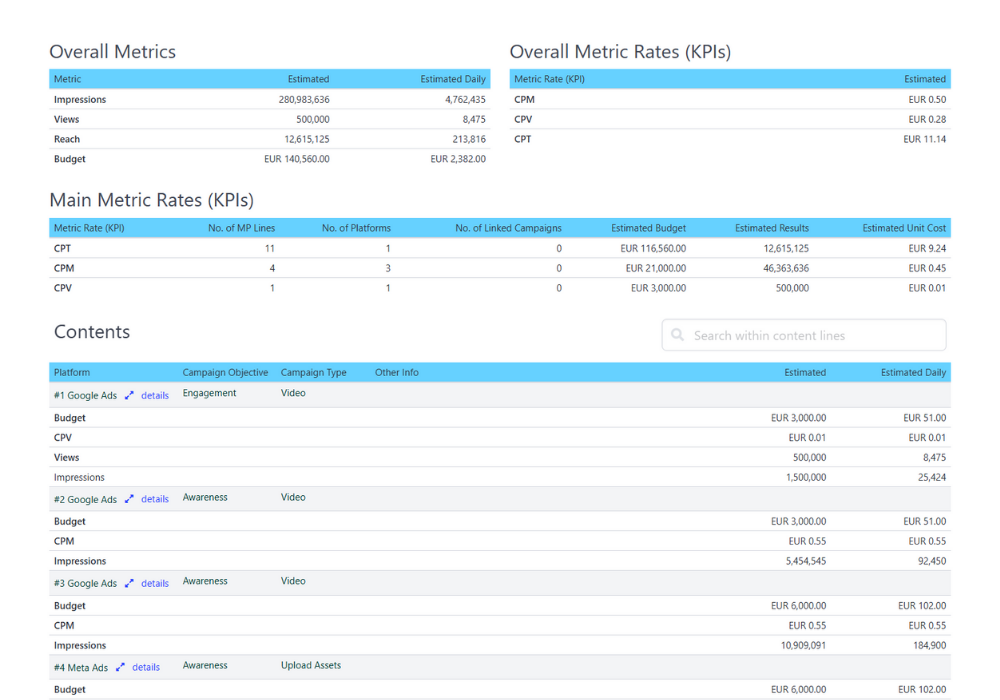
If you manage awareness through digital media planning tools, Planned vs Achieved becomes the operating layer that keeps campaigns from turning into set and forget execution. It is the difference between running ads and managing delivery.
In performance, the feedback loop is fast. CPA and ROAS tell you quickly if something is broken. In awareness, bad delivery can hide for weeks. Spend can be on plan while reach is not. CPM can drift up and quietly shrink impressions. Frequency can creep up, and you end up delivering to the same people again and again. Video views can look fine while completion collapses because delivery shifts to weaker placements. If you do not track delivery against plan, you can finish the month with a campaign that spent correctly and delivered incorrectly.
This is why pacing matters. And pacing is not just spend pacing. It is delivery pacing against the model you planned.
An awareness plan is not one number. It is a set of assumptions and guardrails that define how delivery should behave. The minimum set is simple: CPM, reach, frequency, and a quality signal like VTR or completion when video is part of the mix.
CPM is the price of access to reach. If CPM changes, delivery changes. So CPM is not a reporting metric you look at after the month ends. It is a pacing trigger you watch weekly.
Reach is your progress metric. Impressions matter, but reach tells you if you are expanding the audience or looping inside the same pocket.
Frequency is where awareness teams get trapped. Awareness needs repetition, but repetition must be controlled. Your job is not to push frequency high. Your job is to keep frequency intentional and stable, so you build memory without burning the audience.
When video is in the plan, VTR and completion are quality signals. They tell you whether you are buying attention or just buying cheap distribution. Two campaigns can spend the same budget and deliver the same impressions, but one delivers real viewing and one does not. Without Planned vs Achieved, those differences get hidden inside averages.
Q4 makes all of this harder because it adds volatility. It does not just mean more competition. It means the same plan can behave differently week to week. This is where set and forget becomes expensive.
First, CPM inflation. Same budget, higher CPM, fewer impressions, slower reach growth. If you only watch spend pacing, you notice too late.
Second, frequency drift. Delivery optimizes into smaller subsets because it is cheaper. Reach starts to flatten while frequency climbs. On paper you are delivering. In reality you are looping.
Third, placement mix shifts. The algorithm finds cheaper inventory. CPM can look fine, but attention drops, VTR drops, completion drops, and the message stops landing.
Fourth, creative fatigue. High ad load plus seasonal noise makes fatigue happen faster. Frequency rises, engagement softens, view quality drops, and you pay more for less.
So what do you do weekly without turning the campaign into chaos. You steer back to plan with clear rules, inside your media planning tool, using Planned vs Achieved as the control panel.
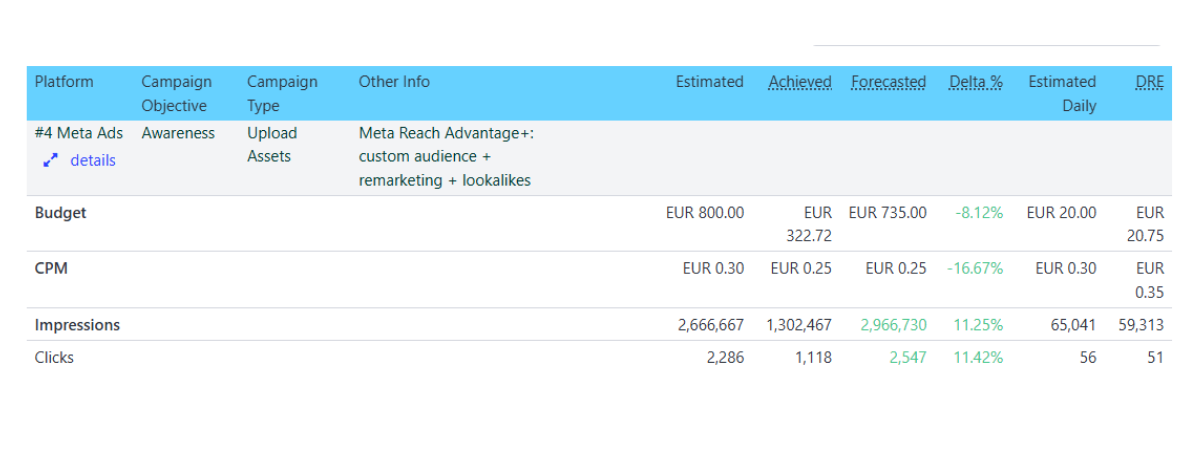
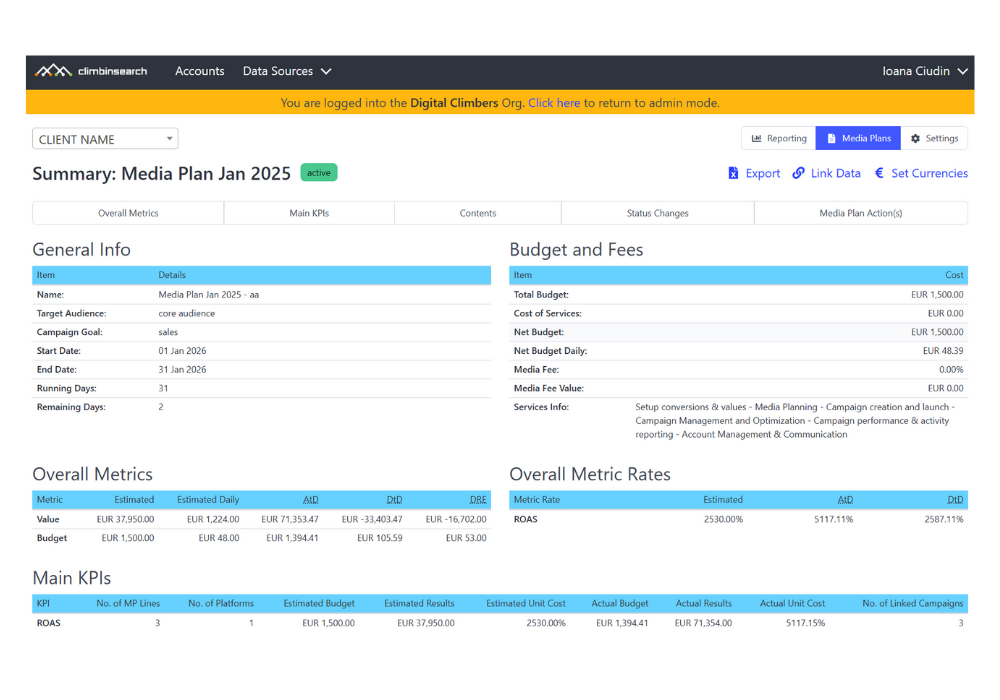
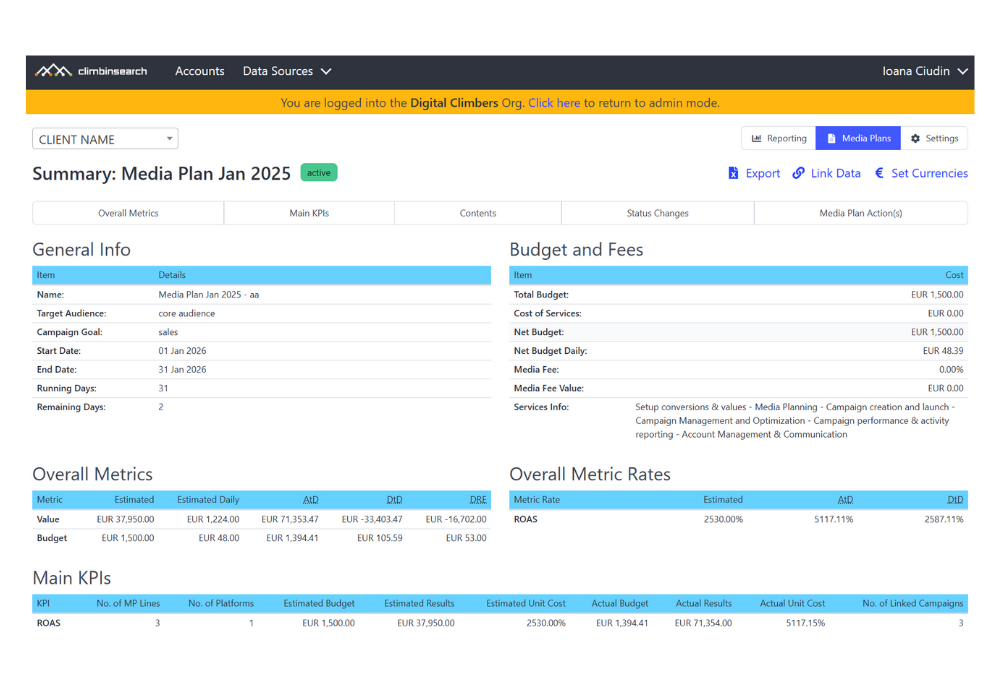
When you put Estimated, Achieved, Forecasted, Delta % and Estimated Daily on the same screen, Planned vs Achieved becomes the control panel because it turns “performance” into something you can actually steer. This is where media planning software tools outperform spreadsheets. They keep plan and delivery in the same workflow.
Start every week with the scoreboard. Check spend, impressions, reach, frequency, CPM, and VTR or completion where relevant. You are not asking did we spend the budget. You are asking did we deliver the plan.
Then diagnose the deviation. Most issues map to one main cause. CPM up usually means delivery down. Frequency up usually means reach down. Placement mix changed usually means attention down. Creative fatigue usually means efficiency down. Pick the cause, then act.
Apply one correction per lever, not ten random tweaks.
Rebalance budgets across channels to protect reach and stabilize pacing. If one channel is getting expensive and another is still efficient at reach, you move budget early, not at the end of the month.
Control frequency through audience and placement decisions. The goal is not to suppress frequency blindly. The goal is to keep reach growing while frequency stays within the range you planned.
Add placement guardrails so delivery does not drift into low attention inventory. You are buying awareness, so protect the environments where people actually watch.
Rotate creative deliberately. Do not wait for the campaign to feel tired. Use weekly delivery signals to trigger refreshes, and treat rotation as part of pacing, not as an afterthought.
Adjust the format split based on what is actually driving reach and attention. If you need incremental reach, shift into formats and channels that expand unique exposure. If attention quality is falling, shift into formats and placements that recover viewing.
Then reforecast the month. This is where most awareness teams break the loop. If week one or week two deviates, the original monthly estimate is no longer real. Digital media planning tools should let you update expected outcomes using achieved CPM and achieved delivery, so the forecast stays honest while there is still time to act. That way everyone sees what the month will deliver if nothing changes, and what it will deliver after the correction. That is the difference between basic marketing reporting and true campaign management.
Awareness improves when learnings accumulate, not when every month is treated as a fresh start. Planned vs Achieved makes learnings usable because it forces structured answers.
What CPM ranges are realistic by channel, market, and season. What frequency range grows reach without burning the audience. Which placements protect attention at scale. Which creatives hold up beyond week two. Which channel mix consistently adds incremental reach.
When you store this inside a digital media planning tool, you do not just run campaigns. You build a repeatable planning model. Plan, deliver, compare, correct, update assumptions, plan better next month.
Awareness does not need more dashboards. It needs one layer that keeps everyone honest. Did we deliver what we planned, and if not, what are we changing this week.